
Your Gut Is Running Your Hormones
Most women are never told this, but your gut health and your hormones are deeply connected. You can’t really support one without supporting the other. We call this the gut-hormone axis.
Understanding this one connection can reframe almost everything: the bloating that gets worse around your cycle, the mood dips that don't make sense, the brain fog that arrives uninvited, the fatigue that no amount of sleep seems to fix.
Let's break it down.
Meet the estrobolome
Inside your gut lives a specific community of bacteria whose primary job is to metabolise and regulate oestrogen. This community is called the estrobolome.
When the estrobolome is working well, and your gut microbiome is diverse, well-fed, and functioning, it helps your body clear spent oestrogen efficiently. Out it goes, via the liver and then the bowel, as it should.
When gut health is compromised through antibiotic use, a low-fibre diet, high stress, dysbiosis, or sluggish bowel transit, something different happens. An enzyme called beta-glucuronidase becomes overactive. It de-conjugates oestrogen that was ready to be excreted, and sends it back into circulation instead.
The result: oestrogen builds up and because oestrogen doesn't exist in isolation, it's always in relationship with progesterone, it impacts that too. This imbalance starts to show up in symptoms that many women assume are just "how hormones are": heavy or painful periods, PMS, bloating, breast tenderness, mood swings, sleep disruption, weight gain around the middle. These aren't just hormonal symptoms. They're gut symptoms too.
Why perimenopause makes this urgent
Perimenopause, the transition phase that can begin a full decade before the last period, is already a time of significant hormonal change. Oestrogen fluctuates erratically. Progesterone begins to decline. The ratio between them shifts.
If the gut isn't clearing oestrogen efficiently at the same time, the fluctuations become more dramatic. The symptoms become harder to manage, and the common advice "eat less, exercise more, push through" misses the root cause entirely.
The gut-hormone axis is also relevant post-menopause. Lower oestrogen levels change the composition of the gut microbiome itself, reducing microbial diversity and increasing gut permeability (often called "leaky gut"). This in turn affects inflammation, mood, bone health, and cardiovascular risk. The systems are always talking to each other.

What actually supports the gut-hormone axis
The good news is that this is genuinely addressable through nutrition and lifestyle. Here are five places to start.
1. Feed your microbiome diversity. The more diverse your gut bacteria, the better it functions. Diversity comes from variety, aim for 30 different plant foods per week (this includes herbs, spices, beans, and wholegrains, not just fruit and veg). More colours, more fibre types, more microbial food sources.
2. Add fermented foods daily. Research from Stanford's Sonnenburg Lab (2021) showed that a diet high in fermented foods increased microbiome diversity and reduced inflammatory markers, more effectively than a high-fibre diet alone. Kefir, natural yoghurt, sauerkraut, kimchi, miso, kombucha, one portion daily makes a measurable difference over time.
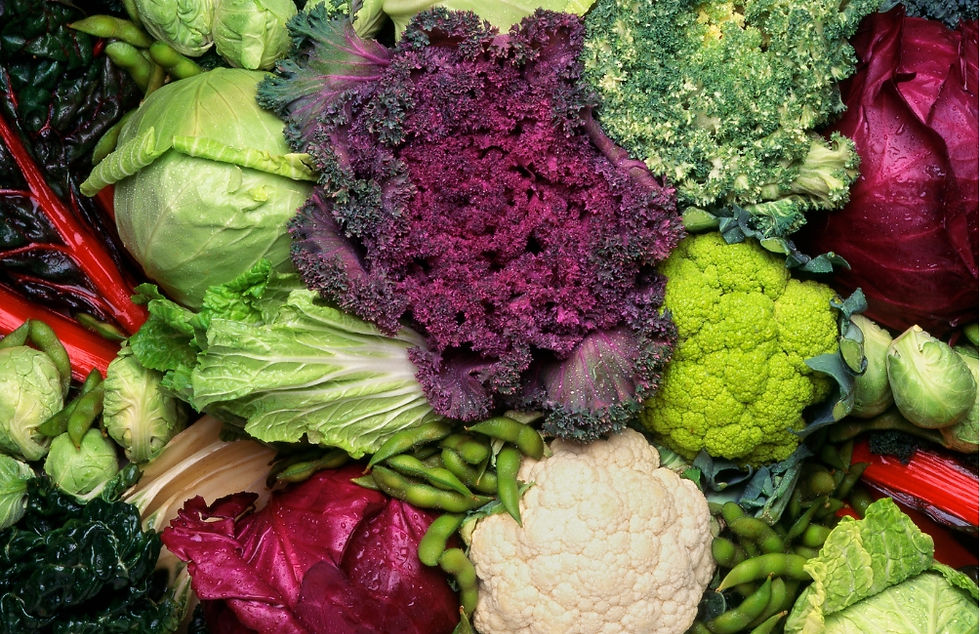
3. Support oestrogen clearance through the liver. The liver is the first stop for oestrogen metabolism before it reaches the gut. Cruciferous vegetables, such as: broccoli, brussels sprouts, cauliflower, and kale contain a compound called DIM (diindolylmethane) which supports healthy oestrogen detoxification pathways. Aim for a portion daily.
4. Keep bowel transit time healthy. Constipation is an oestrogen problem, not just a digestive inconvenience. If oestrogen sits in the bowel waiting for transit, beta-glucuronidase has more opportunity to reabsorb it. Hydration, fibre, movement, and magnesium (glycinate or citrate) all support healthy regularity.
5. Address the stress-gut-hormone triangle. Chronic stress elevates cortisol. Elevated cortisol disrupts progesterone production (they share a precursor), impairs gut barrier function, and alters microbiome composition. The nervous system and the gut communicate constantly via the vagus nerve. Stress management isn't optional, it's a physiological necessity.
The one-thing approach
If all of this feels like a lot but it really doesn't need to be. This is exactly where the 1% Gains principle applies.
Pick one thing. Add one fermented food to one meal a day. Eat one serving of cruciferous vegetables. Drink one more glass of water. Start somewhere, do it consistently, then build from there.
The body doesn't need a perfect protocol. It needs consistent signals. Small, stackable, sustainable, changes. That's how sustainable change and building habits actually works.
Thank you for taking the time to read 'Your Gut Is Running Your Hormones'. If you'd like support navigating perimenopause or hormone-related symptoms through nutrition, I offer one-to-one Nutritional Therapy. Book a discovery call via the link below.
Don't know me yet?
My name is Kate Slatter OAM OLY, and I am a Registered Nutritional Therapist, Functional Medicine Certified Health Coach, and Olympic gold medallist. I work with individuals and organisations on their health and wellbeing, performance, energy, and sustainable health through making small changes that suits their lifetsyle and goals.
Comments