
Not All Fats Are Created Equal
Many clients ask me what fat they should use and when, so here is what we know and what fats/oils you should ideally consider and when to use them.
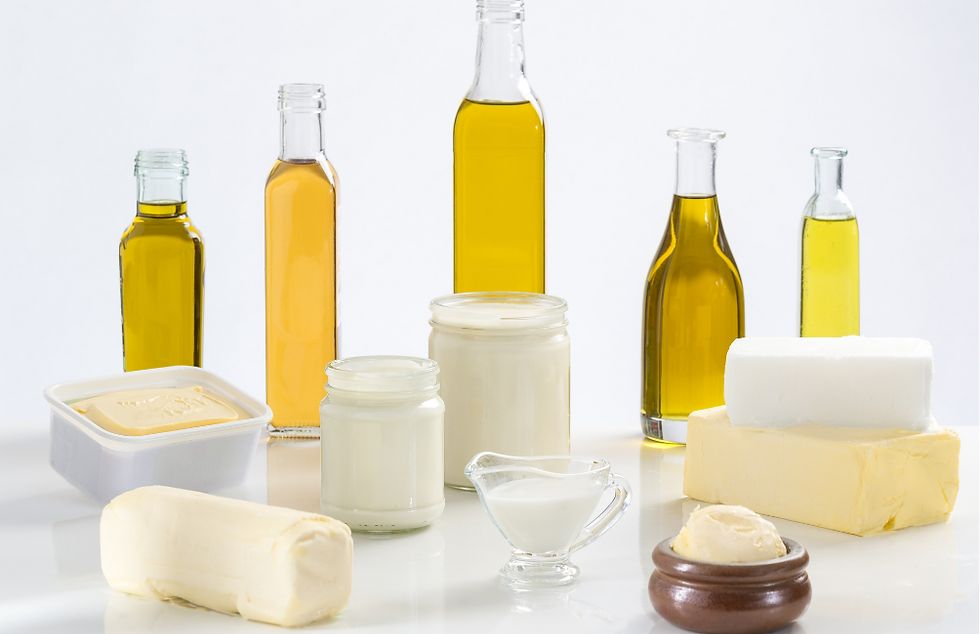
Firstly, fat isn’t the enemy - it’s essential for energy, brain function, and hormone balance, but the type of fat you consume matters. Some fats support your body, while others can contribute to inflammation, which is linked to chronic diseases like heart disease, diabetes, and arthritis.
Breaking fats down there are four main groups:
Saturated Fats: Found in butter, ghee, coconut oil, and animal fats. These are stable at high heat but controversial in excess.
Monounsaturated Fats (MUFAs): Found in olive oil, avocado, and nuts. Heart-healthy and anti-inflammatory.
Polyunsaturated Fats (PUFAs): Includes omega-3 and omega-6 fats. Omega-3 is anti-inflammatory; omega-6 can be pro-inflammatory in excess.
Trans Fats: Artificial fats in processed foods. Bad news. Just avoid them!
So, with differing types of fats what should we use and when?
Best Oils/Fats for Cooking: Heat Stability Matters
Not all oils are good for all types of cooking. When oils are heated beyond their smoke point, they break down, creating harmful compounds that contribute to inflammation. Here’s your go-to guide:
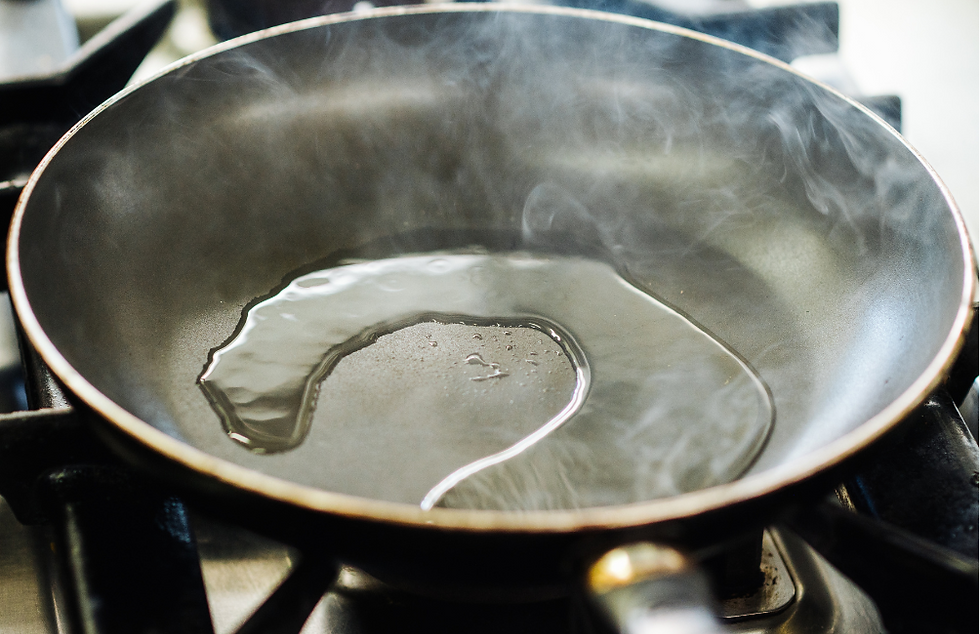
High-Heat Cooking (Frying, Roasting, Grilling)
Best picks:
Ghee (clarified butter) – High smoke point (~250°C), adds richness, supports gut health.
Avocado oil – Smoke point ~270°C, mild flavour, great for high heat.
Coconut oil – Heat-stable, but high in saturated fat (use in moderation).
Tallow/Lard – Traditional, stable, and full of flavour.
Avoid: Vegetable & seed oils (sunflower, canola, soybean) as they oxidize quickly under high heat.
Medium-Heat Cooking (Sautéing, Stir-Frying, Baking)
Best picks:
Extra Virgin Olive Oil (EVOO) – Great for moderate heat, rich in antioxidants.
Sesame oil – Adds flavour and holds up well to medium heat.
Duck fat – Delicious for roasting and frying.
Avoid: Flaxseed or walnut oil—they degrade quickly with heat.
Low-Heat & Cold Use (Dressings, Drizzles, Dips)
Best picks:
Extra Virgin Olive Oil (EVOO) – The gold standard for salads, drizzling, and dips.
Flaxseed oil – High in omega-3, great for dressings but store in the fridge.
Walnut oil – Nutty and delicious, perfect for finishing dishes.
Avoid: Reusing any heated oils - oxidation creates harmful byproducts.
Oxidation and Degraded Fats: The Hidden Danger
When oils are exposed to heat, light, or air for too long, they oxidise, leading to the formation of free radicals - unstable molecules that damage cells and contribute to aging, inflammation, and chronic diseases.
Why does this matter?
Oxidised fats can increase LDL ('bad') cholesterol and promote plaque buildup in arteries.
Free radicals from degraded oils can contribute to cell damage and inflammation, increasing the risk of metabolic disorders.
Reheating oils multiple times (as in deep-frying) can produce toxic aldehydes, which are linked to neurodegenerative diseases and DNA damage.
Tip: Always store oils in dark bottles away from heat, avoid repeatedly heating oils, and choose stable fats for cooking to minimise oxidation.
Omega-3 vs. Omega-6: Balancing the Scale
You’ve probably heard about omega-3 and omega-6, but what’s the deal? Both are essential fatty acids (meaning our bodies can’t make them, so we need to get them from food).
Omega-3 (Anti-inflammatory powerhouse)
Found in fatty fish (salmon, sardines, mackerel), flaxseeds, walnuts, and chia seeds.
Supports brain health, reduces inflammation, and promotes heart health.
Omega-6
Found in vegetable oils (soybean, corn, sunflower), processed foods, and grain-fed meats.
We need some omega-6, but too much (which is common in modern diets) can fuel inflammation.
The key: Aim for an omega-6 to omega-3 ratio of around 4:1 or lower (many Western diets are closer to 20:1).
The easiest way to fix this:
Eat more omega-3-rich foods.
Cut down on processed foods and seed oils.
Choose high-quality oils for cooking.

Takeaway: Your Best Bet for Cooking and Health
For high-heat cooking: Avocado oil, ghee, coconut oil.
For medium heat: Extra virgin olive oil, sesame oil, duck fat.
For cold use: Extra virgin olive oil, flaxseed oil, walnut oil.
Avoid: Processed vegetable oils, trans fats, reheated oils.
Making simple swaps in your cooking oil choices can go a long way in reducing inflammation and supporting overall health. So, next time you’re staring at that wall of oils in the supermarket, you’ll know exactly what to reach for!
Reach out if you need any further help, www.kateslatter.com
To your health and happiness


Comments